&geometry(126x115) "North Road Vet")
Why Is My Dog Drinking More Water Than Usual?
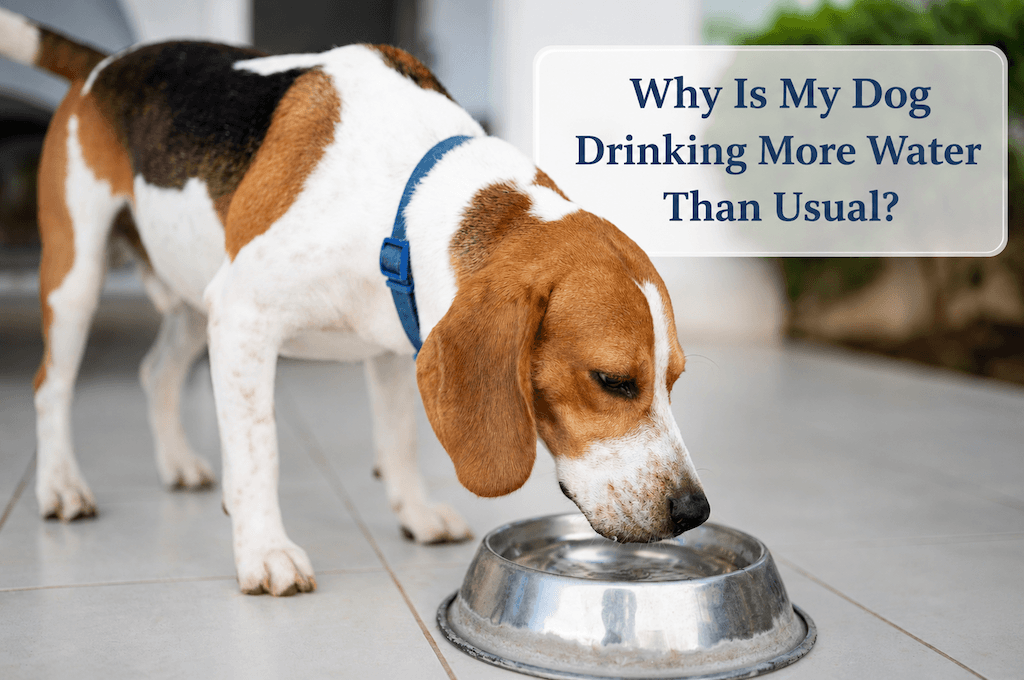 "Why Is My Dog Drinking More Water Than Usual?")
Have you noticed your dog heading to the water bowl more often lately? Maybe you are topping it up more frequently, they are drinking for longer at a time, or they have started asking to go outside during the night.
An increase in thirst does not always mean something is wrong. Dogs may naturally drink more during warmer weather, after being active, or when their diet contains more dry food. However, when the change is significant, continues for several days, or is accompanied by other symptoms, it is worth taking notice.
The veterinary term for excessive thirst is polydipsia. It commonly occurs together with increased urination, which is known as polyuria.
There is no need to assume the worst, but a genuine change in your dog's usual drinking habits should not be overlooked.
How much water should a dog normally drink?
Every dog's water needs are slightly different.
As a general guide, many healthy dogs consume approximately 40-60 mL of water per kilogram of body weight each day. The exact amount can change depending on your dog's activity level, diet, age, environment and general health.
For example, a 10 kg dog may drink somewhere around 400-600 mL over a 24-hour period.
There are also plenty of normal reasons why your dog may need more water. A warm Victorian day, an active afternoon outdoors, changing from wet food to dry food, pregnancy or feeding puppies may all increase their requirements.
Instead of focusing only on an exact measurement, consider one important question:
Is my dog drinking considerably more than they usually do?
You see your dog every day, which means you are often in the best position to recognise when one of their normal habits has changed.
Why would a dog suddenly start drinking more?
In some cases, there may be a simple explanation.
Your dog may drink more because they have:
been more active than usual
spent time in warmer weather
recently changed to a dry-food diet
lost fluids due to vomiting or diarrhoea
eaten something containing more salt than normal
started a medication that can increase thirst.
When excessive thirst continues, however, your veterinarian may want to investigate whether an underlying medical condition is contributing.
Kidney disease
The kidneys play an important role in maintaining the body's water balance and concentrating urine.
When kidney function becomes impaired, a dog may produce larger quantities of dilute urine. Because more fluid is leaving their body, they compensate by drinking more.
For some dogs, increased thirst and urination are among the earlier changes owners notice, even before their pet appears obviously unwell.
Diabetes
Diabetes mellitus causes glucose levels in the bloodstream to become too high.
Some of this excess glucose passes into the urine, taking additional water with it. This can cause dogs to urinate more frequently and become much thirstier.
Other signs can include changes in appetite and unexplained changes in body weight.
Cushing's disease
Cushing's disease develops when a dog's body is exposed to excessive levels of the hormone cortisol.
Drinking and urinating more are two commonly recognised symptoms. Some dogs also develop a stronger appetite, increased panting, thinning of the coat, skin changes or a pot-bellied appearance.
Liver disease or infection
Liver problems, fever, infections and several other illnesses can affect the way the body regulates fluids and may cause a dog to become unusually thirsty.
For female dogs that have not been desexed, increased thirst can also be associated with pyometra. This is a serious infection of the uterus and requires prompt veterinary treatment.
Medication
Certain medications can cause dogs to drink and urinate more than they did previously.
Corticosteroids and some diuretic medications are common examples.
If your dog's thirst changes after they begin taking a new medication, speak with your veterinarian. Do not discontinue prescribed medication unless your vet has advised you to do so.
What other changes should I look for?
Increased thirst can tell us more when it is considered alongside other changes in your dog's behaviour or health.
Watch for signs such as:
urinating more often than normal
accidents occurring inside the house
needing to go outside during the night
changes in appetite
unexplained weight gain or weight loss
vomiting or diarrhoea
seeming less energetic
increased panting
changes to the skin or coat
a swollen or enlarged-looking abdomen
changes in the appearance or smell of their urine.
If your dog's increased drinking is happening alongside any other unusual symptoms, arranging a veterinary check is recommended.
Try this simple 24-hour water check
If you are unsure whether your dog is genuinely drinking more than usual, measuring their water intake for a day can give you useful information.
Over 24 hours:
Measure how much water you initially place in your dog's bowl.
Keep track of any additional water you add.
At the end of the 24-hour period, measure what is left.
Calculate approximately how much your dog has consumed.
Remember to consider any other places your dog may be drinking from.
If several pets use the same water bowl, the measurement will only be an estimate.
Make a note of the amount and bring it with you to your veterinary appointment. Even an approximate measurement may help your vet understand what has been happening at home.
One thing you should never do
Never limit your dog's access to drinking water because you are worried they are drinking too much.
If a medical condition is causing your dog to lose additional water through their urine, preventing them from drinking enough to replace that fluid can result in dehydration and may make their condition worse.
Your dog should always have fresh water available unless your veterinarian specifically instructs otherwise.
What will the vet check?
Because excessive thirst can have many different causes, your veterinarian will usually look at your dog's overall health and history rather than concentrating on the drinking alone.
They may ask when you first noticed the change and whether there have been differences in your dog's appetite, diet, medications, body weight, urination or behaviour.
Following a physical examination, blood tests and urine testing may be recommended. These tests can provide information about kidney and liver function, blood glucose, urine concentration, infection, electrolyte levels and certain hormonal conditions.
The team at North Road Veterinary Centre can assess your dog's symptoms and recommend appropriate testing or treatment based on what they find.
When should I take my dog to the vet for excessive drinking?
Arrange an appointment if your dog is regularly drinking more than they normally would, especially when there is no obvious reason for the change.
It is particularly important to have them checked if their thirst is accompanied by increased urination, changes in appetite, unexplained changes in weight or a noticeable reduction in energy.
More urgent veterinary attention may be needed if increased thirst occurs with vomiting, diarrhoea, weakness, collapse, confusion, refusal to eat, signs of heat stress, suspected toxin exposure or difficulty urinating.
Sometimes there is a simple reason for a dog to drink more. In other situations, increased thirst may be an early signal of an underlying health problem.
If your dog has started drinking or urinating more than usual, contact our team to arrange an appointment.
| Tags:DogHealth Advice |