&geometry(126x115) "North Road Vet")
Why Does My Cat’s Breath Smell So Bad?
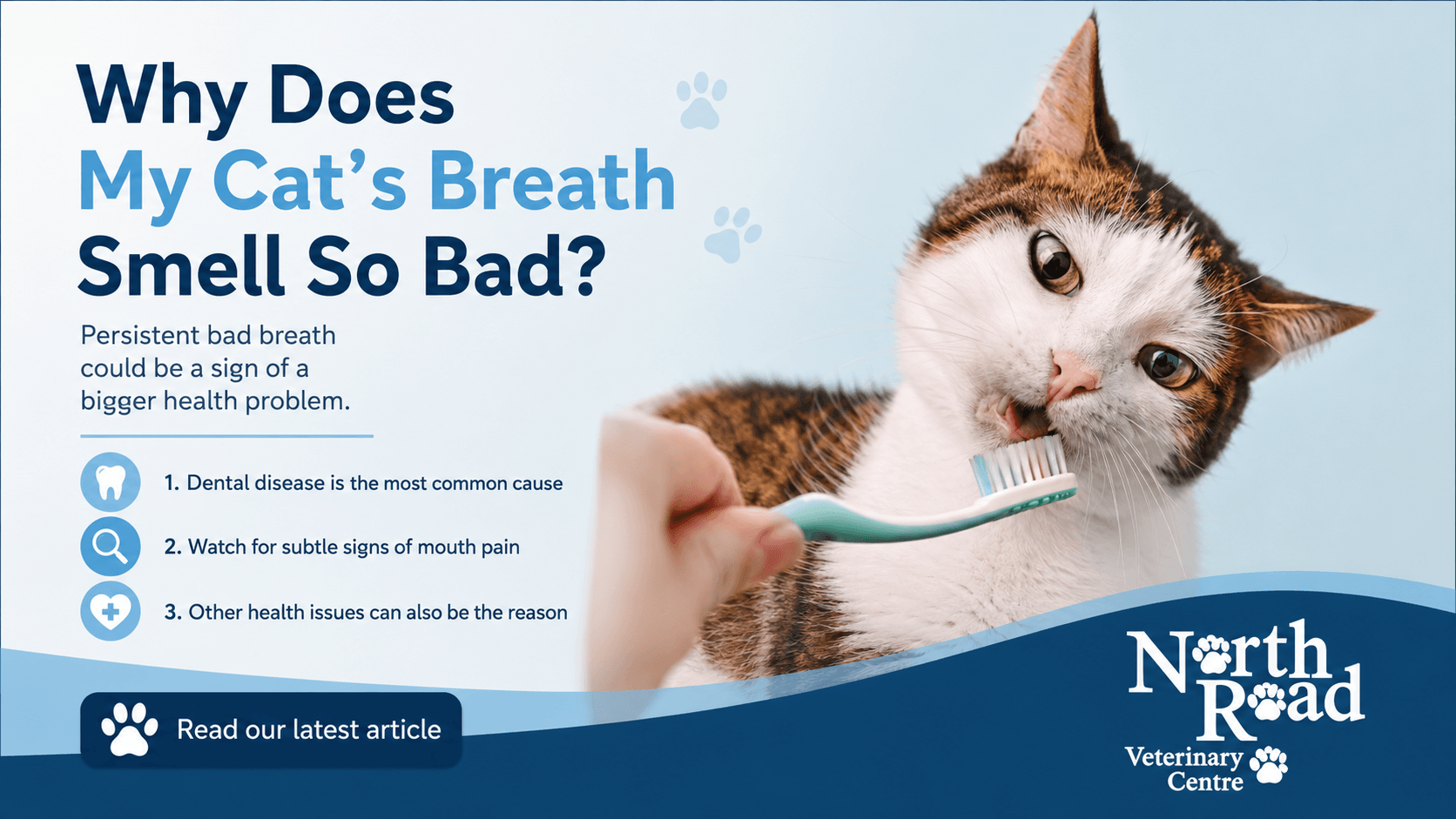 "Why Does My Cat’s Breath Smell So Bad?")
Cats are not known for having minty-fresh breath. After a meal of wet food or tuna, a slightly fishy smell is hardly surprising.
However, if your cat’s breath regularly makes you pull away when they come close, it may be worth paying attention.
Ongoing bad breath can be one of the earliest signs of a dental problem. In some cases, it may also be connected to an underlying health condition that needs veterinary attention.
Because cats are remarkably good at hiding discomfort, a change in their breath may be the first clue that something is not quite right.
The Quick Answer: Persistent Bad Breath Is Not Normal
A temporary food-related smell will usually pass. Breath that remains unpleasant, becomes stronger, or suddenly smells different should not be dismissed as simply part of owning a cat.
Bad breath is also known as halitosis. It is not a disease by itself, but rather a symptom that may have several possible causes.
For many cats, the source of the smell is inside the mouth. Bacteria, plaque, inflamed gums, damaged teeth, or infection can all produce noticeable odours.
The smell may be accompanied by obvious changes, but this is not always the case. Your cat may continue eating, grooming, playing and asking for attention despite having a painful mouth.
Look Beyond the Smell
Your cat cannot tell you that a tooth hurts, so it helps to watch how they behave around food and during their usual routine.
Possible signs of dental discomfort include:
- Taking longer to finish meals
- Approaching food but then walking away
- Dropping biscuits or pieces of food
- Chewing mainly on one side
- Switching from dry food to softer food
- Licking their lips more than usual
- Pawing or rubbing at the mouth
- Drooling or producing blood-stained saliva
- Grooming less frequently
- Becoming quieter, less social or more irritable
- Losing weight
These changes can develop gradually and may be easy to overlook. Some owners first notice that their cat is becoming fussy with food when the real issue is that chewing has become uncomfortable.
A normal appetite does not necessarily rule out dental pain. Many cats continue eating even when it hurts because they are hungry.
Dental Disease Is a Common Explanation
Plaque begins as a soft film containing bacteria, saliva, and food particles. It forms naturally on the surface of the teeth.
When plaque is not removed, it can harden into tartar. This rough material provides more places for bacteria to collect, particularly around the gumline.
Over time, the gums may become inflamed and begin to pull away from the teeth. Infection can develop below the gumline, damaging the tissues that hold each tooth securely in place.
You may notice:
- Yellow or brown tartar
- Redness along the gums
- Swollen or bleeding gums
- Loose, damaged or missing teeth
- A strong, rotten smell
- Sensitivity around the face or mouth
Dental disease is more than a cosmetic issue. Inflamed gums and unhealthy teeth can cause significant discomfort and affect your cat’s willingness to eat, groom and interact normally.
Could Your Cat Have a Painful Tooth?
Not every dental problem is immediately visible.
Cats can develop fractured teeth, infections around the roots, and tooth resorption. Tooth resorption occurs when the structure of a tooth gradually breaks down. It can be extremely painful, but the affected area may be difficult to see without a thorough dental examination.
A tooth may appear relatively normal above the gumline while a problem is developing beneath it.
This is one reason a complete veterinary dental assessment may involve examining your cat’s mouth under general anaesthetic. Dental radiographs may also be recommended where appropriate to assess the parts of the teeth hidden below the gums.
What if the Bad Breath Appeared Suddenly?
A sudden change in your cat’s breath can occasionally occur when something becomes lodged in their mouth.
Small pieces of food, grass, hair, bone, or another object may become caught between the teeth, around the gums, or beneath the tongue. The trapped material can irritate the tissue and begin to smell as it breaks down.
You may notice sudden drooling, gagging, pawing at the mouth, bleeding or difficulty eating.
String and thread are particularly concerning. Never pull on anything hanging from your cat’s mouth. It may be caught beneath the tongue or extend into the throat or digestive tract.
Contact North Road Veterinary Centre for advice if you think your cat has something trapped in their mouth.
When Bad Breath Is Not Coming From the Teeth
Although dental disease is a frequent cause, an unusual smell can sometimes provide a clue about another health issue.
Kidney disease
Cats with kidney problems may develop a breath that smells chemical, metallic, urine-like, or ammonia-like.
Other possible changes include drinking more, urinating more often, losing weight, vomiting or showing less interest in food.
Diabetes
A sweet, fruity or unusual breath smell can occasionally occur in cats with diabetes.
Cats with diabetes may also become unusually thirsty or hungry, produce larger amounts of urine and lose weight despite continuing to eat.
Gingivostomatitis
Feline gingivostomatitis causes severe inflammation throughout the mouth. It can make eating, swallowing and grooming very painful.
Affected cats may have strong bad breath, bright red tissue in the mouth, excessive drooling, weight loss or difficulty approaching food.
Ulcers, infections and abnormal growths
Mouth ulcers, infected wounds and abnormal growths may also create unpleasant breath.
Facial swelling, difficulty swallowing, blood in the saliva or a sudden change in eating habits should always be assessed by a veterinarian.
The smell alone cannot diagnose the problem. However, describing whether it smells rotten, sweet, metallic or ammonia-like may help your veterinary team understand what you have noticed.
When Should Your Cat See a Vet?
Book an appointment if your cat’s bad breath:
- Continues beyond a recent meal
- Becomes progressively stronger
- Develops suddenly
- Smells sweet, fruity, chemical or ammonia-like
- Occurs alongside drooling or bleeding
- Is accompanied by changes in eating or grooming
- Appears with vomiting, weight loss or increased thirst
- Comes with a noticeable change in behaviour
Seek prompt veterinary advice if your cat stops eating, cannot swallow comfortably, appears distressed or develops significant swelling around the face.
What Happens During a Dental Assessment?
Your veterinarian will begin by examining your cat’s teeth, gums, tongue and surrounding tissues. They will look for tartar, redness, damaged teeth, gum recession, ulcers, swelling and anything that may be trapped in the mouth.
A complete assessment and dental treatment generally need to be performed under general anaesthetic. This allows the veterinary team to inspect the entire mouth thoroughly without causing unnecessary stress or discomfort.
North Road Veterinary Centre has an on-site dental facility for diagnosing and treating dental disease.
Depending on the findings, a dental procedure may include:
- A complete oral examination
- Dental radiographs where required
- Scaling above and below the gumline
- Polishing the teeth
- Assessing gum pockets
- Treating or removing badly damaged teeth
- Pain relief and other medication where appropriate
- Aftercare instructions and home dental recommendations
If the mouth appears healthy or your cat has signs of a broader illness, blood tests, urine tests or other investigations may be recommended.
Can You Fix Bad Breath With Dental Treats?
Dental treats, diets, gels and water additives may help reduce plaque as part of an ongoing oral care routine.
However, these products cannot repair an infected tooth, remove disease beneath the gumline or reverse advanced periodontal damage.
Trying to cover the smell without checking the cause is a little like using air freshener in a room without finding what is creating the odour. It may make things seem better temporarily, but it does not solve the underlying problem.
Existing bad breath should be assessed before starting a new home dental routine.
Helping Your Cat Maintain a Healthier Mouth
Once your cat’s teeth have been checked, your veterinarian can recommend an oral care plan suited to their age, temperament and dental condition.
Introduce toothbrushing gradually
Use only a toothbrush and toothpaste made specifically for pets. Human toothpaste is not suitable for cats to swallow.
Begin by allowing your cat to taste a small amount of pet toothpaste. Once they are comfortable, gently introduce your finger or a soft toothbrush to the outside surfaces of the teeth.
Keep sessions brief, calm and positive. It may take time before your cat accepts regular brushing.
Do not attempt to brush an obviously painful or inflamed mouth without speaking to your vet first.
Choose appropriate dental products
Not every product labelled for dental health provides the same level of support. Ask your veterinarian about suitable dental diets, treats, gels or other products for your cat.
Include dental checks in routine care
Regular examinations help identify developing dental problems before they become more advanced and painful.
Cats with previous dental disease and older cats may benefit from more frequent monitoring.
Fresh Breath Begins With a Healthy Mouth
Persistent bad breath is not something your cat should simply have to live with.
The cause may be plaque and gum inflammation, a painful tooth, something trapped in the mouth or, less commonly, another health condition. Finding the source is the first step towards helping your cat feel more comfortable.
If your cat’s breath has changed or you have noticed differences in their eating, grooming or behaviour, contact our team to arrange a dental and health check.
| Tags:CatPet Dental Health |