&geometry(126x115) "North Road Vet")
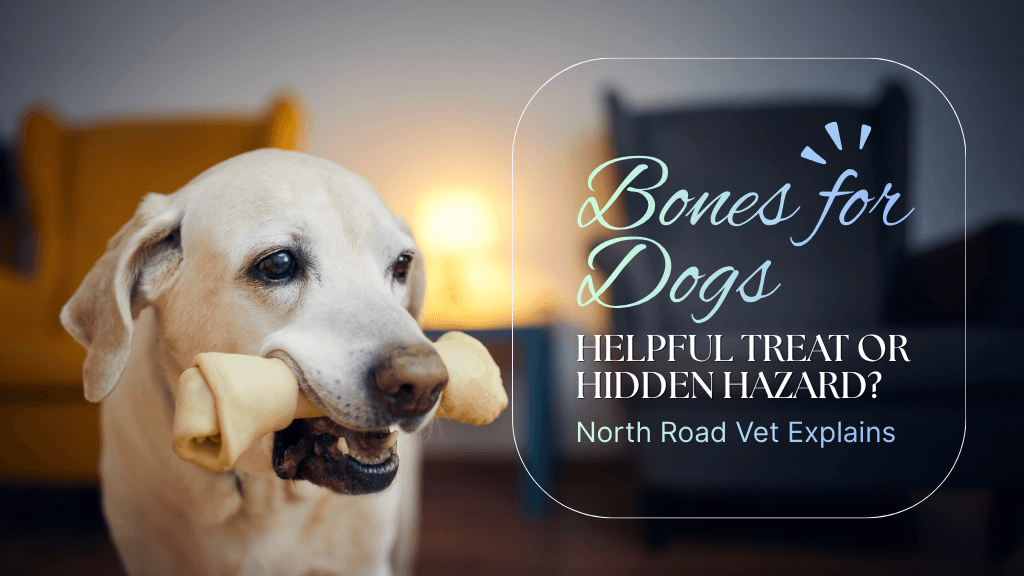
Bones for Dogs: Helpful Treat or Hidden Hazard? North Road Vet Explains
 "Bones for Dogs: Helpful Treat or Hidden Hazard? North Road Vet Explains")
Many dog owners love treating their pets to a bone. It’s easy to see why, chewing can help reduce boredom, provide mental stimulation, and support dental hygiene. For many Melbourne pet families, giving a dog a bone feels like a normal part of caring for their furry companion.
At North Road Vet, we also see the risks that can come with unsafe bone feeding. Unfortunately, bones can sometimes lead to fractured teeth, choking hazards, stomach injuries, and intestinal blockages. While some bones can be offered safely, choosing the wrong type can quickly turn into a veterinary emergency.
Rule Number One: Never Give Dogs Cooked Bones
Cooked bones should always be avoided.
- What Happens During Cooking: Cooking removes moisture from bones, making them dry and fragile.
- Sharp Splinters: Cooked bones can crack into sharp pieces that may damage the mouth, throat, stomach, or intestines.
- Serious Health Risks: These injuries can lead to painful infections, perforations, or dangerous obstructions requiring emergency veterinary treatment.
- Blockage Concerns: Because cooked bones are difficult to break down, they can easily become stuck within the digestive system.
Choosing Raw Bones More Safely
Raw bones are usually a safer alternative, although selecting the right type is still important.
- Bigger Is Better: The bone should be too large for your dog to swallow whole, reducing the risk of choking.
- Avoid Small or Brittle Bones: Rib bones and pork bones are more likely to splinter or lodge in the throat.
- Raw Chicken Bones: Chicken necks and wings are sometimes fed raw, but they can carry harmful bacteria and may not provide enough resistance for proper dental cleaning.
North Road Vet’s Bone Safety Tips
If you choose to give your dog a raw bone, these precautions can help keep them safer:
- Supervise Every Chewing Session: Always keep an eye on your dog while they have a bone.
- Dispose of Bones Promptly: Raw bones left outdoors for too long can develop harmful bacteria, especially during warmer weather.
- Don’t Let Dogs Bury Bones: Buried bones can become contaminated and unsafe when unearthed later.
- Skip Frozen Bones: Frozen bones are extremely hard and commonly contribute to cracked teeth.
- Know Your Dog’s Chewing Style: Dogs that aggressively chew or try to break bones quickly may be at greater risk of dental injuries.
Safer Alternatives to Bones
If bones make you uneasy, there are still plenty of excellent enrichment options available.
Interactive Rubber Toys:
Fillable toys can provide long-lasting entertainment using healthy snacks or Xylitol-free peanut butter.
Dental Treats:
Specially formulated dental chews can help maintain oral health without the dangers of splintering.
Long-Lasting Chew Toys:
Durable synthetic toys can satisfy your dog’s natural urge to chew.
Signs Your Dog May Need Veterinary Attention
If your dog has swallowed a cooked bone or develops symptoms after chewing, it’s important to seek veterinary advice quickly.
Keep an eye out for:
- Persistent coughing or gagging
- Vomiting or diarrhoea
- Tiredness or unusual behaviour
- Straining during bowel movements
If your dog is showing any of these signs, please contact our team as soon as possible. Early treatment can make a significant difference to your pet’s health and recovery.
| Tags:DogHealth AdvicePet Safety |